

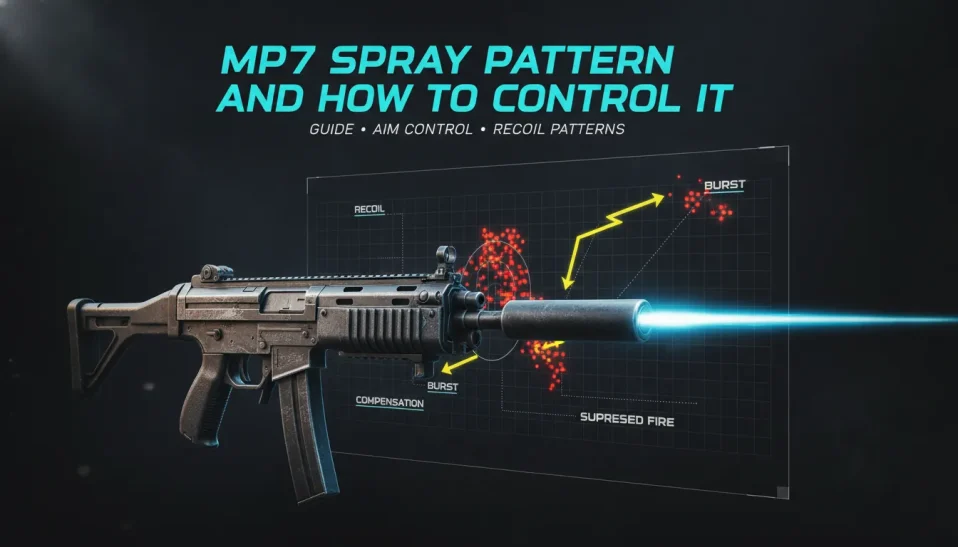
The MP7 has a problem, and the problem is not the MP7. It is that the MAC-10 and the MP9 do most of the same job for less money, the UMP-45 does it better for less money, and the P90 does a different job for more. The MP7 lives in the gap between all of them, which is why most players scroll past it. That does not make it a bad weapon. It makes it a specific one, and specific weapons reward players who can name the reason they bought them. At BloodyCase, this is the honest case for the MP7.
![Funny [YELLOW] Case case cs go](https://rs.bloodycase.com/?url=cdn.bloodycase.com/cases/1475894062878822400.webp&w=370&h=336&output=webp&q=100)
![Funny [RED] Case case cs go](https://rs.bloodycase.com/?url=cdn.bloodycase.com/cases/1475893882817351680.webp&w=370&h=336&output=webp&q=100)
![Funny [PURPLE] Case case cs go](https://rs.bloodycase.com/?url=cdn.bloodycase.com/cases/1475893755763494912.webp&w=370&h=336&output=webp&q=100)
![Funny [BLUE] Case case cs go](https://rs.bloodycase.com/?url=cdn.bloodycase.com/cases/1475894282886844416.webp&w=370&h=336&output=webp&q=100)
![Funny [GREEN] Case case cs go](https://rs.bloodycase.com/?url=cdn.bloodycase.com/cases/1475894570033090560.webp&w=370&h=336&output=webp&q=100)
MP7 at a Glance
| Side | Both |
| Price | $1,500 |
| Kill reward | $600 |
| Magazine | 30 rounds, 120 in reserve |
| Rate of fire | 750 rounds per minute |
| Effective range | Close to middle. The cheaper SMGs give up before it does |
| Armour penetration | Low |
A slightly slower fire rate than the MP9 and the MAC-10, and that slowness is the feature rather than a compromise. It is why the pattern is controllable and why the weapon still functions when the fight stretches out.
The Economics: Why This Gun Exists
Work the arithmetic once and the whole weapon class makes sense.
A MP7 costs $1,500. Every kill pays $600. Two kills means you have earned $1,200 on a $1,500 purchase, on a round you were otherwise going to spend nothing and win nothing. Even if your team loses that round, you personally walk into the next one with more money than the rifle player who died for $300.
This is the actual design of the category. The kill reward exists to give a losing team a route back into the match that does not depend on winning a round outright. That is why the correct way to think about an eco round is not ‘can we win this’ but ‘how much damage and money can we extract’. Two kills and a lost round is a good eco. Zero kills and a lost round is two lost rounds, because you are broke again next time.
The MP7 keeps the $600 reward while costing more than the cheap SMGs, which is where the objection comes from. The counter is that the extra few hundred dollars is only meaningful if you were going to spend it on something. If the alternative was armour or a grenade, buy the MP9 and buy the armour. If the alternative was leaving the money in your account, the MP7 is a straight upgrade and the price gap is imaginary.
How the MP7 Spray & Recoil Patterns Works
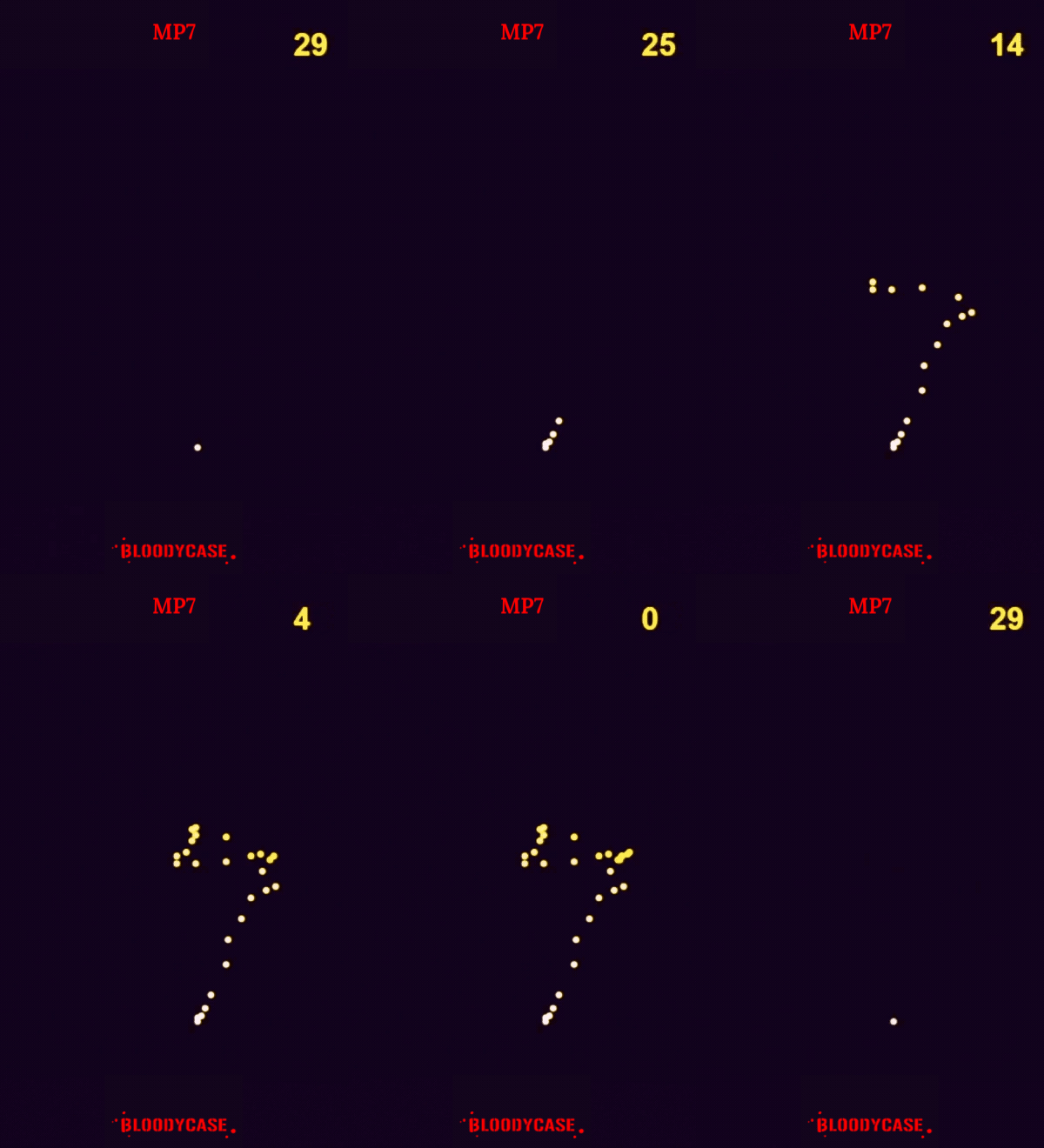
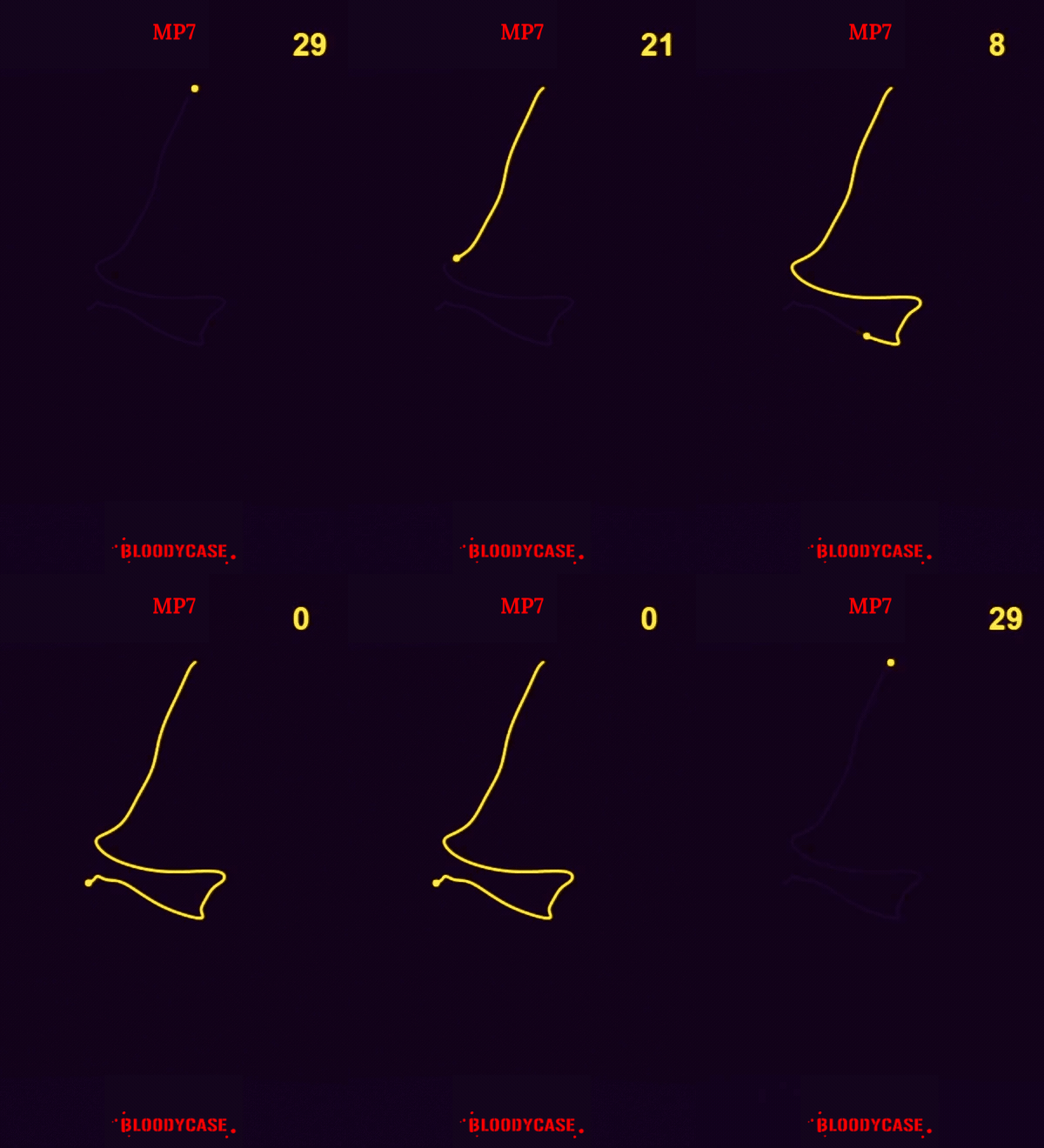
Fixed path, repeated every magazine, with a small random spread on each individual bullet on top. Standard for the category.
What separates the MP7 is that the pattern is slow enough to be inside. On a MAC-10 the magazine is gone before your correction has fully happened. On the MP7 you have time to pull down, see where the bullets went, and adjust within the same spray. That is a rifle-like experience at an SMG price, and it is the mechanical reason the weapon stretches further than its cheaper siblings.
It is still an SMG. The pattern loosens, the damage falls off, and there is a distance past which none of this helps. But the usable window is genuinely wider, and knowing where that window ends is the entire skill of the gun.
Recoil Behaviour
| Bullets | What the gun does | What you do |
|---|---|---|
| 1 to 10 | Vertical climb, slower and more readable than the MP9 | Steady pull down. You have time here, use it |
| 11 to 20 | Flattens, moderate horizontal drift | Lateral correction. This phase is actually usable |
| 21 to 30 | Loosens, then empty | Micro-corrections or release |
Compare that middle row to the MAC-10 table. On the MAC-10, bullets 11 to 20 are a warning sign. On the MP7 they are a working part of the weapon. That is the difference you are paying for.
Damage, Armour and Why Range Kills You
Every SMG shares the same two limits, and understanding them explains almost every unfair-feeling death you will have with one.
The first is damage per bullet against armour. Armour does not just absorb damage, it changes how much of each bullet gets through, and SMG bullets have low armour penetration. Against an unarmoured opponent an SMG kills fast enough to feel like a rifle. Against a kitted opponent the same burst leaves them alive and shooting back. This is why SMG rounds against a saving enemy feel incredible and SMG rounds against a full buy feel hopeless: it is the same weapon and a completely different equation.
The MP7 does not solve the armour problem, it gives you a longer window to work inside it. Against a kitted opponent you are still landing several low-value bullets, and you still lose the straight fight to a rifle. What you gain is that the fight does not have to be at knife range for you to land them.
The second is damage falloff over distance. Bullets do less damage the further they travel, and this is on top of the accuracy problem. So at range you are landing fewer bullets and each one that lands is worth less. Those two effects multiply rather than add, which is why SMG performance does not decline gently with distance, it collapses.
Put together: the MP7 has a distance past which it stops being a weapon and starts being a noise. Every good SMG player knows roughly where that line is on the maps they play, and simply never fights past it.
Effective Range at a Glance
| Distance | What is happening | What to do |
|---|---|---|
| Very close | Strong, though the faster SMGs beat you in a pure race | Take it, but know a MAC-10 would have won it faster |
| Short | Comfortable. This is the weapon’s home | Take the fight, aim upper chest, use the readable pattern |
| Medium | Still functional, which is unusual for an SMG | This is why you bought it. Fight here |
| Long | Now it is an SMG again, and rifles win | Do not take it. Better than the MP9 is not good |
Movement Accuracy Is Your Real Advantage
This is the mechanic the whole weapon class is built on, and most players who buy SMGs never consciously use it.
Every weapon in CS2 gets less accurate while you move, but the penalty is not applied equally. Rifles are punished severely: a rifle fired at a run is close to a random number generator, which is why rifle play is built around counter-strafing, planting your feet and taking the shot from a standstill. SMGs are punished far less. You still shoot better standing still, but the gap between moving and stationary is small enough that an SMG player can do things a rifle player mechanically cannot.
What that buys you in practice is timing. A rifle player peeking an angle has to arrive, stop, settle and shoot, and that whole sequence is a window their opponent can shoot into. With the MP7 you can arrive and shoot, and the window closes faster. You can peek wider without punishing yourself, you can strafe through an angle rather than stopping in it, and you can take a fight from a body position the opponent has not pre-aimed. Against an enemy expecting rifle rhythms, that is genuinely disorienting.
The trap is reading this as permission to run and gun. It is not. It is permission to be less still than a rifle, which is a smaller and more specific advantage than it sounds. Use it to control when the fight starts, not to replace aiming.
Standing still is a mechanic rather than a decision, and the mechanic is counter-strafing. If you are strafing right with D, you tap A for an instant and your velocity drops to zero almost immediately, and a bullet fired on that frame is accurate. Simply releasing D leaves you sliding for a moment. Every SMG rule above still sits on top of this: move to get somewhere, stop to shoot when you can, and use the movement advantage for the times you cannot.
Key Principles
- Buy it when you can name the range. If your position on this map involves middle-distance fights, the MP7 is the SMG for it. If you are rushing a site or holding a corner at four metres, buy the cheaper one and keep the money.
- Do not fight rifles at rifle range anyway. Better than the MAC-10 at distance is not the same as good at distance. The MP7 stretches your effective range, it does not remove the ceiling.
- The readable pattern is the point. Use it. Correct within the spray rather than releasing and re-peeking. That is a habit the cheap SMGs never let you build.
- Aim upper chest. Volume kills. Same as every SMG.
- The $600 is still the reason. Two kills pays for the weapon and most of your next buy. Play an eco round for damage and money, not heroics.
- Use the movement. SMGs shoot far better while moving than rifles do, and this is the one you can move with and still hit something that is not standing next to you.
- Know why you did not buy the MP9. If you cannot answer that in one sentence, buy the MP9. The MP7 only makes sense as a deliberate choice, and an accidental MP7 is just an expensive MP9.
How to Practice Firing the MP7 in CS2
Two or three sessions, and one of them matters more than the rest.
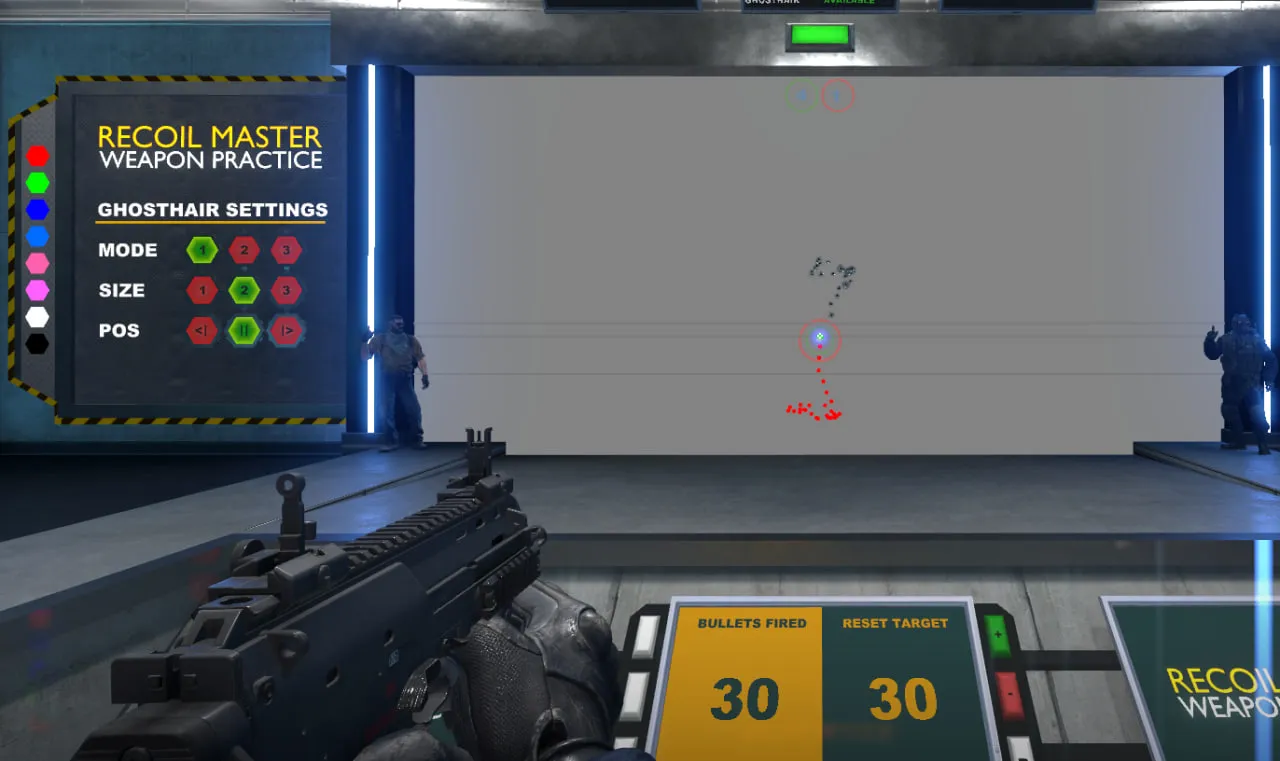
- Session 1, Find the Pattern: Full magazines into a wall from close range, roughly two player widths back, with and without compensation. Notice that you can actually see and fix your own spray inside a single magazine. That is new if you came from the MAC-10.
- Session 2, Find the Wall: The important one. On a real map, fight bots or players at progressively longer distances until the weapon stops working. Note where that happens. That distance is the only genuinely useful piece of information about the MP7, and nobody can tell it to you, because it depends on your aim as much as on the gun.
- Session 3, Live the Range: Deathmatch, MP7 only, deliberately taking middle-distance fights rather than close ones. You are training judgement here, not aim.
Frequently Asked Questions
MP9 for close and cheap, MP7 for middle distance and a bit more money. On a true eco where you are rushing anyway, the MP9 or the MAC-10 is the better spend and it is not close. On a half buy where you expect to hold a position and take a real fight, the MP7 earns the difference.
The UMP, on most rounds. It costs less, it handles armour better, and it works at similar distances. The MP7’s case over the UMP is the fire rate and the thirty-round magazine, which matter when you expect multiple opponents rather than one good duel. That is a narrow case and you should be honest with yourself about whether you are in it.
It depends entirely on what the other $250 or $300 was going to do. If it was going into armour or utility that changes the round, buy the MP9 and spend it. If it was going to sit in your account until next round, buy the MP7 and take the better weapon. There is no fixed answer, which is exactly why so few players buy it.
Because it is priced between two clear answers. Broke players want the cheapest gun that still pays $600, and players with money want a rifle. The MP7 asks you to be in a specific financial and tactical spot, and most rounds are not that spot. That is a positioning problem, not a quality problem.
Yes, and this is probably its best round. The enemy has no armour, so the damage limitation disappears, and the extra range means you can punish a save from further away than the cheap SMGs manage. Thirty rounds helps when a save round turns into four people rushing you at once.

Ethan is the Chief Editor at BloodyCase. He has been playing Counter-Strike since the 1.6 era and started writing about the game almost by accident – at first, he posted analyses of updates and patches on forums, and he never stopped. He’s in charge of editorial content: he decides what to write about, checks the accuracy of articles before publication, and keeps track of how the game is changing to ensure that the information on BloodyCase is always up-to-date and interesting.
He’s still playing CS2 and annoying everyone with his AWP skills.