

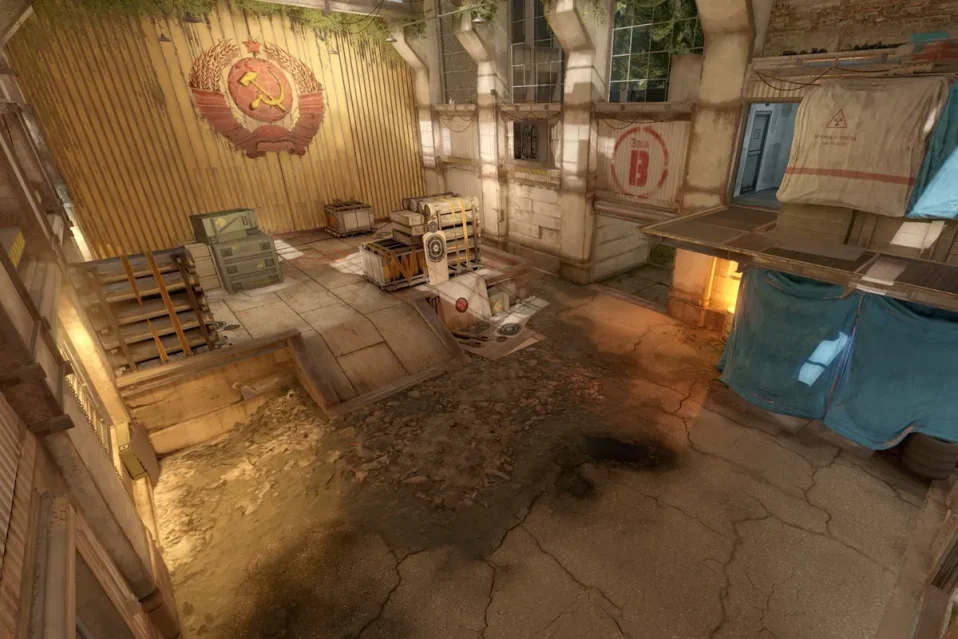
Cache has been a competitive staple since its introduction, known for balanced gameplay and straightforward layout. Despite being temporarily removed from the active duty pool, cache callouts remain crucial knowledge for players. The Chernobyl-themed map features clear sightlines and predictable rotations, but that doesn’t mean communication is simple. One missed call and your team gets flanked through Vents or caught off-guard at Quad.
![Funny [YELLOW] Case case cs go](https://rs.bloodycase.com/?url=cdn.bloodycase.com/cases/1475894062878822400.webp&w=370&h=336&output=webp&q=100)
![Funny [RED] Case case cs go](https://rs.bloodycase.com/?url=cdn.bloodycase.com/cases/1475893882817351680.webp&w=370&h=336&output=webp&q=100)
![Funny [PURPLE] Case case cs go](https://rs.bloodycase.com/?url=cdn.bloodycase.com/cases/1475893755763494912.webp&w=370&h=336&output=webp&q=100)
![Funny [BLUE] Case case cs go](https://rs.bloodycase.com/?url=cdn.bloodycase.com/cases/1475894282886844416.webp&w=370&h=336&output=webp&q=100)
![Funny [GREEN] Case case cs go](https://rs.bloodycase.com/?url=cdn.bloodycase.com/cases/1475894570033090560.webp&w=370&h=336&output=webp&q=100)
Learning CS2 cache callouts properly means understanding both the common names and regional variations. Mid control dictates the pace, site executes require precise utility, and callouts on cache need to account for multiple angles on every position. Whether you played the original or are learning the updated version, accurate calls win rounds.
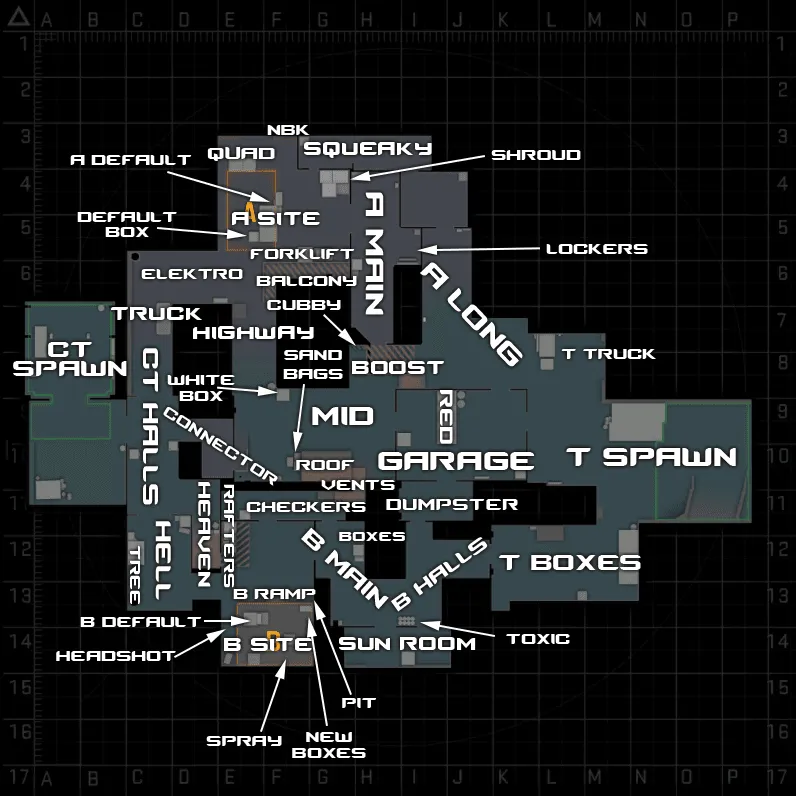
List of All Cache Callouts
T Spawn Area
- T Spawn – Terrorist starting position in the industrial area. Teams typically split toward Mid or A Main from here.
- Garage – The garage structure near T Spawn. Provides early cover when moving toward A.
- T Red – Red container area near T Spawn. Quick reference for early positioning.
Mid Section
- Mid – Central area connecting both sites. Control here opens up the entire map.
- Boost/Mid Boost – The boost position in Mid where players stack to peek over the wall. Common early-round play.
- Connector – Pathway connecting Mid to A site. Critical chokepoint for site takes and rotations.
- White Box – White-colored box in Mid providing cover. Easy visual reference point.
- Checkers – Area with checkered floor pattern in Mid. Named after the distinctive flooring.
- Z/Z Connector – The Z-shaped connector from Mid to B site. Alternative route to B.
- Sandbags – Sandbag position in Mid. Common hold spot for controlling sightlines.
A Site
- A Site – The bomb site itself. Open layout with multiple entry points.
- A Main – Primary T entrance to A site. Long corridor that gets heavily util-ed.
- Squeaky – The squeaky door entrance to A from outside. Named for the door sound it makes.
- Quad – Stack of four boxes on A site. One of the most famous positions on cache map callouts.
- Default – Standard plant position on A, usually near Quad for cover.
- Forklift – The forklift vehicle on A site. Provides cover and common holding angle.
- Truck – Large truck on A site. Important cover and plant position.
- Headshot/HS Box – Box on A where only heads are visible when crouching behind. Named for the angle it creates.
- NBK – Corner position on A site named after pro player NBK who famously used it. Also called Ninja.
- Highway – Elevated catwalk above A site leading to CT. Alternative name for the raised platform.
B Site
- B Site – The second bomb site. Tighter layout than A with fewer angles.
- B Main – Primary corridor leading to B from T side. Long sightline for AWPers.
- Vents – Ventilation shaft providing alternative entry to B. Crucial flank route and one of the key cache csgo callouts.
- Checkers – Back corner of B site with checkered pattern. Not the same as Mid Checkers.
- Heaven – Elevated position overlooking B site. Strong CT hold spot.
- Toxic – Area with toxic waste barrels on B. Visual reference and common position.
- Headshot – Similar to A, a box where only heads show. Different location, same concept.
- Back Site/Back B – Rear area of B site near CT rotations. Where defenders fall back to.
- B Default – Standard plant spot on B, usually in the open for post-plant angles.
CT Spawn Area
- CT Spawn – Counter-Terrorist starting position. Central location for quick rotations.
- CT Mid – CT approach to Mid from spawn. Early control position.
- Sun Room – Bright room near CT spawn with windows. Named for the lighting.
Alternative and Regional Callouts
Understanding csgo cache callouts means knowing the variations:
- NBK vs Ninja – Same corner on A. NBK is more common in EU, Ninja elsewhere.
- Highway vs Catwalk – The raised platform on A. Highway is standard, Catwalk less common.
- Squeaky vs Door – The noisy entrance to A. Squeaky is universal now.
- Heaven vs Rafters – Elevated B position. Heaven is more standard.
- Checkers confusion – Exists in both Mid and B. Always specify which area.
- Z vs Connector – Both refer to the B approach from Mid. Z is more descriptive of the shape.
Tips from Professionals on Cache Callouts
- Mid control dictates everything – Don’t just say Mid. Call Boost, White Box, or Sandbags specifically. Your team needs exact positions.
- Vents needs constant updates – This flank route changes games. Call when it’s open, closed, smoked, or being pushed.
- Quad is the key A position – Players there can see everything. Call how many enemies are Quad immediately.
- Specify which Checkers – Mid Checkers and B Checkers are totally different. Never just say Checkers alone.
- Squeaky timing matters – Call when you hear it open. Even if you don’t see anyone, the sound gives crucial info.
- Highway control wins A retakes – Call if CTs have Highway. It’s impossible to retake if they hold that high ground.
- B Main is an AWP duel – Call smokes and flashes here. Long sightline means util usage is critical intel.
- Connector pushes end rounds – This aggressive play catches teams off guard. Call it loud and early.
- Count players going A Main – That corridor only fits so many. Knowing numbers helps predict the execute.
- Sun Room timing – Call when CTs leave Sun Room early. It means they’re pushing or stacking a site.

Ryan writes most of the articles on Bloodycase about the best skins, explanations of float values, spray patterns, and analyses of the settings used by professional CS2 players, among other topics. He got into this a few years ago while playing CS2 at the amateur level, and since then he’s continued to study more and more about what’s going on and how to play better.
When he’s not writing, he’s usually poring over a ton of material or arguing with friends about whether a particular skin is truly rare or just being heavily pushed. He likes playing on the terrorist side because they have the AK-47.